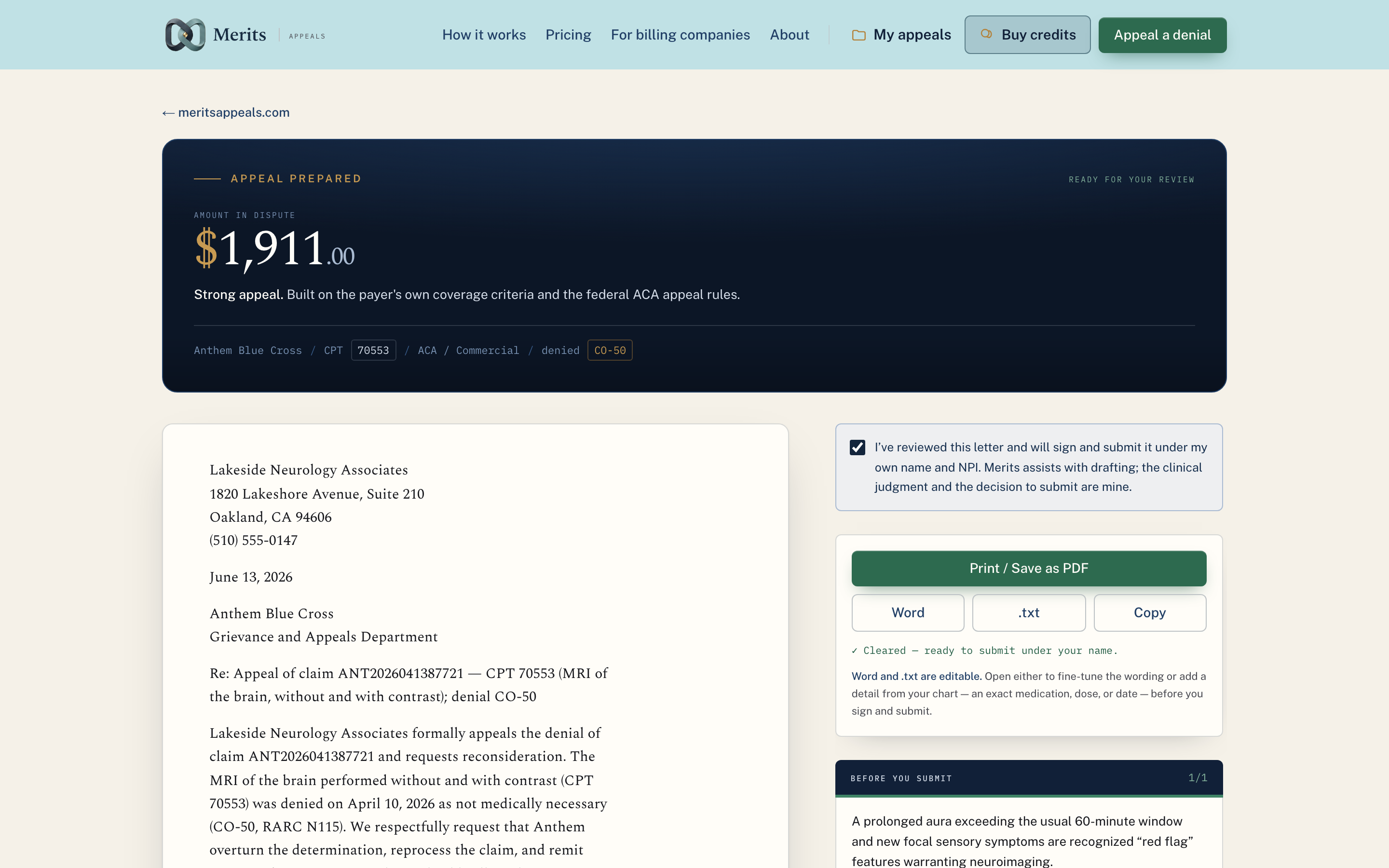
Merits turns a denied claim into a complete, signature-ready appeal in about a minute, with every argument quoted from the payer's own policy and federal law. $9 a letter. No account, no contract.
June 2026 —Most denied medical claims are never appealed. Usually not because the denial was right, but because appealing one by hand takes an hour a small practice doesn't have. The money gets written off, and the patient often eats the bill.
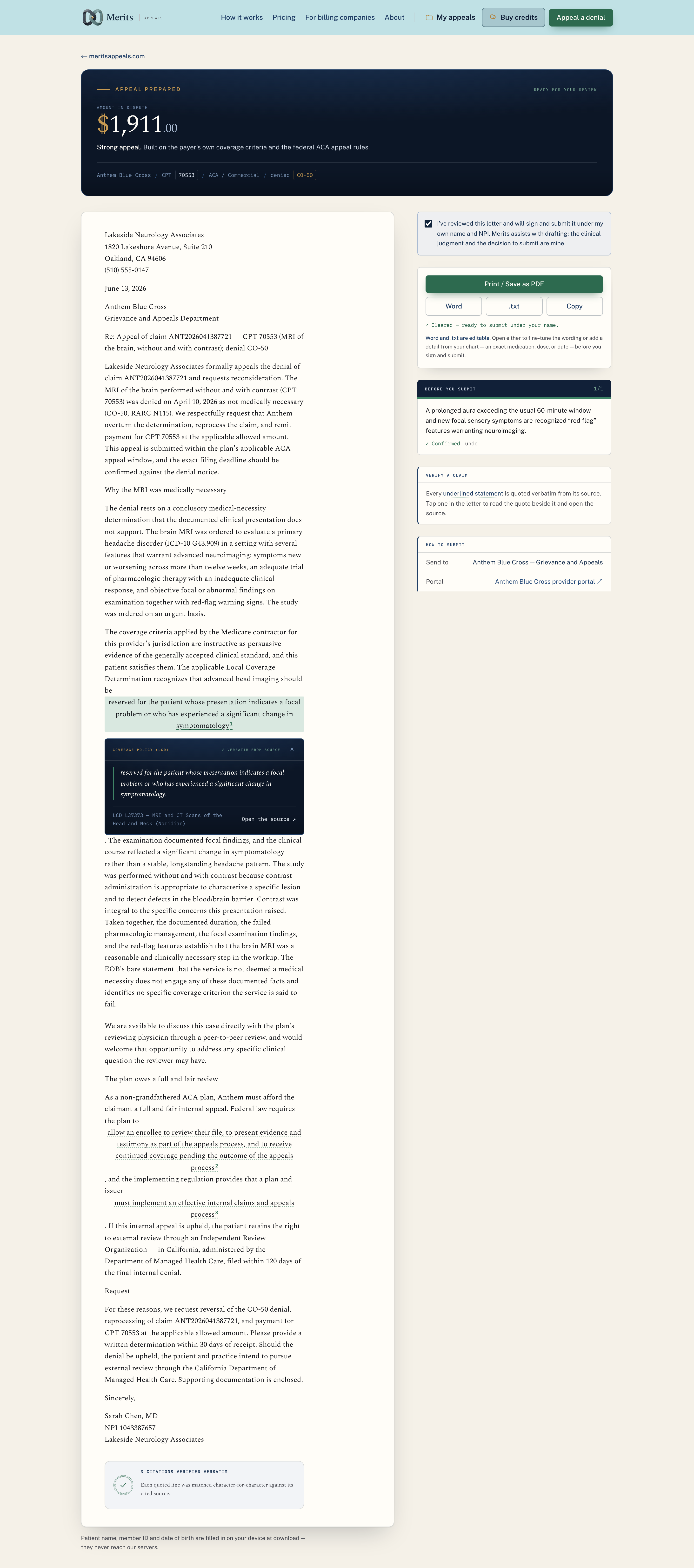
Merits is built to remove that hour. A physician or biller uploads the denied explanation of benefits; about a minute later they get a complete appeal — the cited letter, the records to attach, and where and when to file it — ready to review, sign, and send.
What sets it apart is what it refuses to do. General-purpose AI will write a confident appeal that cites a regulation that doesn't exist. Merits works from a closed library of the actual rules a denial is won on — 484 payer medical policies across 43 insurers, federal appeal law, Medicare coverage rules, 240 FDA labels, and more than 40,000 external-review rulings — and quotes each source word for word, with a link to open it. If a claim isn't backed by a real source, it doesn't go in the letter.
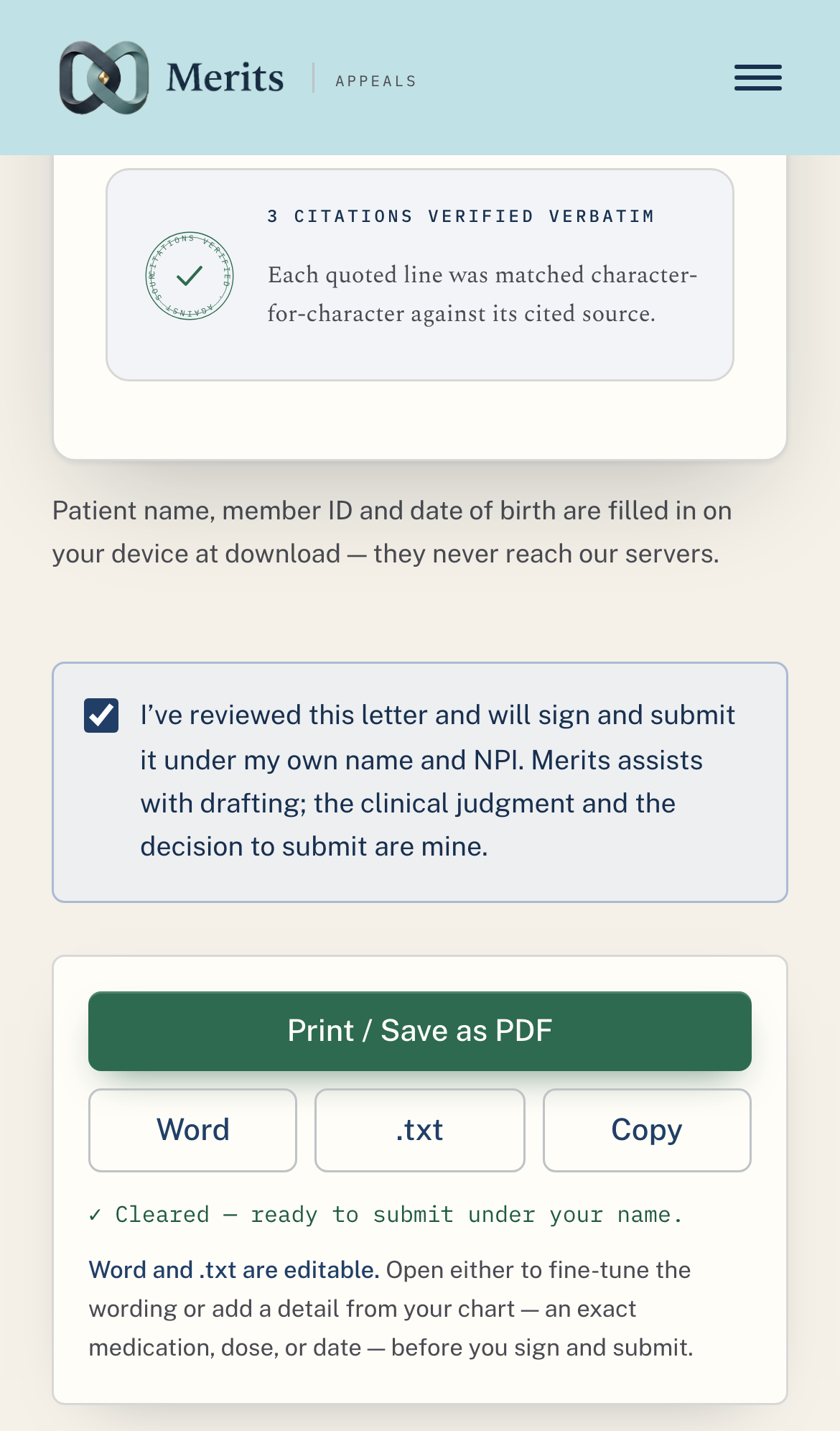
The patient's name, ID, and date of birth are stripped in the browser before anything is sent. There is no account required to start, nothing to install, and no contract. A single letter is $9, dropping to about $5 in volume.
The gap it targets is wide. When providers appeal Medicare Advantage prior-authorization denials, KFF found 80.7% are overturned — yet only 11.5% are ever appealed. Most denied care is never contested, and most contested care gets paid.
“A winnable denial gets written off for two reasons: the time it takes, and the risk of signing your name to a letter with a citation you didn't check,” said João Guilherme Franco, who founded Merits after two decades building data and product businesses — including inside insurance and anti-fraud — and a decade researching healthcare innovation. “We wanted something that does the hour of work in a minute and can't bluff — every line traces back to a source you can open.”